Aug 20, 2024
Small-caps in the US have been extreme laggards compared to large-caps over the last couple of years, but what about small-caps in other countries? Below is a look at the price change (%) of seven small-cap country ETFs since February 2012 (the first point in which all seven were available).
The Russell 2,000 small-cap US ETF (IWM) is up 159.9% over these 12+ years, and only India small-caps (SMIN) have done better with a gain of 222.8%. India small-caps only recently took the lead on the US with a big jump higher over the last 18 months or so.
Small-caps in other countries have been poor options for US investors relative to owning something like the S&P 500 ETF (SPY). The Europe small-cap (IEUS) and Japan small-cap (SCJ) ETFs are up 68.2% and 63.9%, respectively, since February 2012, while the UK small-cap ETF (EWUS) is up 38.8%.
Small-cap ETFs for China (ECNS) and Brazil (EWZS) are flat-out negative over this extended 12+ year time frame with China down 41% and Brazil down 50%.
If you’ve been lamenting the lagging performance of US small-caps, it could have been worse!

If you enjoyed this content, we think you’ll love Bespoke’s two membership levels. Below is a look at the various reports and tools included with a Bespoke Premium or Bespoke Institutional membership. Click here or on the image below to sign up for a two-week trial today!

Aug 15, 2024
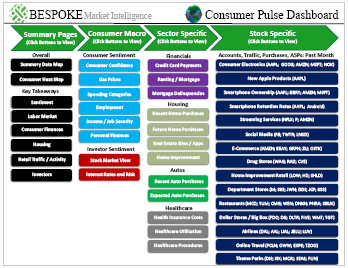
Bespoke’s Consumer Pulse Report is an analysis of a huge consumer survey that we run each month. Our goal with this survey is to track trends across the economic and financial landscape in the US. Using the results from our proprietary monthly survey, we dissect and analyze all of the data and publish the Consumer Pulse Report, which we sell access to on a subscription basis. Sign up for a 30-day free trial to our Bespoke Consumer Pulse subscription service. With a trial, you’ll get coverage of consumer electronics, social media, streaming media, retail, autos, and much more. The report also has numerous proprietary US economic data points that are extremely timely and useful for investors.
We’ve just released our most recent monthly report to Pulse subscribers, and it’s definitely worth the read if you’re curious about the health of the consumer in the current market environment. Start a 30-day free trial for a full breakdown of all of our proprietary Pulse economic indicators.
Aug 13, 2024
There are currently 21 stocks in the S&P 500 that have dividend yields above 5%, and there are now 61 stocks in the index that have a dividend yield that’s higher than the 3.87% that the 10-Year Treasury Note is currently yielding.
Today we wanted to highlight the two stocks in each S&P 500 sector with the highest dividend yields. Below we highlight the two highest yielders in each sector along with the company’s market cap, its year-to-date total return, distance from its all-time high, and next dividend ex-date (if it’s been announced). Whether or not these dividends are safe is a different story (yes, we’re talking about you…Walgreens), but we hope this is a good starting point for further research!
The sector that stands out the most is Consumer Staples because the two highest yielders in the entire S&P come from this sector. Walgreens Boots (WBA) currently has a dividend yield of 9.8%, while tobacco/nicotine-producer Altria (MO) has a yield of 7.8%. WBA already cut its dividend in half once this year and it still yields nearly 10% because its share price is down 60% year-to-date! Even still, WBA is set to at least make its next $0.25/share quarterly payment after its 8/21 ex-date a week from now. Altria (MO), on the other hand, is yielding 7.8% even though its shares have posted a total return of 30.4% YTD.
The only sector that doesn’t have at least one stock yielding more than the 10-year US Treasury is Technology. As shown in the table, Cisco (CSCO) and IBM are the highest-yielding S&P 500 Tech stocks with yields of just over 3.5%.

In addition to highlighting the two highest-yielding stocks in each S&P 500 sector, below is a look at the two stocks in each sector that are down the most from their all-time share-price highs. On average, these 20 stocks are down 78% from their all-time highs.
Two stocks in the Financial sector that remain a shell of their former selves from before the Financial Crisis are the two that are down the most from all-time highs: AIG and Citigroup (C).

If you enjoyed this content, we think you’ll love Bespoke’s two membership levels. Below is a look at the various reports and tools included with a Bespoke Premium or Bespoke Institutional membership. Click here or on the image below to sign up for a two-week trial today!
